The Message
What hip-hop has been telling America for decades.

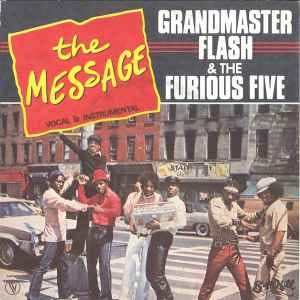
It feels like a lot of white America has spent the last 40 or 50 years listening only to the choruses of hip-hop songs.
The hooks. The vibes.
The soundtrack to nights out, while bottles were being delivered, and consequences felt far away.
If you had listened to the verses, you would have heard an entire canon of testimony.
You would have heard our Black brothers and sisters, our fellow citizens, describing this exact moment. Describing what it feels like when law enforcement shows up in your neighborhood not to protect you, but to control you. To remind you who has power. To make fear part of daily life.
This has been happening every single day in America for as long as I’ve been alive.
I may have a slightly different vantage point than most. I’ve spent thousands of hours in rooms with rappers while they were writing their verses and recording them, talking through what they were saying and why, and listening closely to the meaning, not just the sound.
For me, the evidence has always been there. It’s embedded in the music. In the lyrics. In the stories that have been documented, recorded, and replayed for decades. Those songs weren’t abstract. They were firsthand accounts of what is possible in America when power goes unchecked.
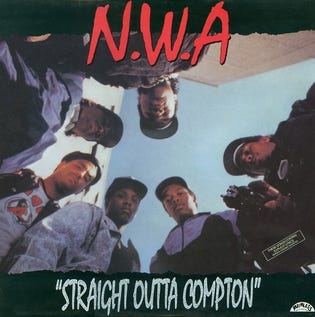
Those verses describe raids that come without warning. Enforcement that doesn’t distinguish between targets and bystanders. The kind of fear that gets embedded in a community when the people with badges and guns aren’t there to serve you, they’re there to remind you of your place.
What feels different now is not the behavior, it’s the reach.
What was once contained, ignored, or rationalized as happening “over there” is now spilling outward. Into white communities. Into neighborhoods that once believed they were insulated.
I’m honestly shocked by how many people are suddenly up in arms about what’s happening in our neighborhoods right now, about ICE moving through communities, and about Renee Nicole Good, the 37-year-old woman who was shot and killed in Minneapolis by an ICE agent during a traffic stop in a residential neighborhood.
Her death is tragic. It’s unnecessary. It should never have happened.
But what’s unsettling to me is how new this outrage seems to be for so many people.
Because what ICE is doing right now is not new.
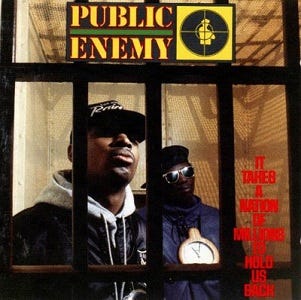
For decades, police have gone into Black neighborhoods in America in almost exactly the same way. Raids at dawn. Doors kicked in. Intimidation as strategy. “Enforcement” that sweeps up whoever happens to be nearby. Collateral damage framed as acceptable, as inevitable, as the cost of keeping everyone else safe.
The uniforms change. The acronyms change. The agency patches are different. The justifications shift from “war on drugs” to “border security” to whatever language polls well that year.
But law enforcement is law enforcement. The power dynamic is the same. The fear is the same. The message is the same: you are not protected by us, you are subject to us.
I know what some of you are thinking: this time is different.
And in some ways, you’re right.
This isn’t a rogue police chief in Wichita. This isn’t even a corrupt department that could, in theory, be held accountable. These are direct orders from the President of the United States, a man the Supreme Court has granted essentially universal immunity. There is no mechanism to stop him. No adult supervision. No guardrails left.
The legacy media that might once have sounded the alarm is either complicit or terrified. When officials victim-blame a woman shot dead in Minneapolis, the press reports it as fact with barely a question. One of the last checks on authoritarian power has collapsed.
So yes, the scale is different. The speed is different. The explicitness is different.
But here’s what I need you to understand:
The capacity for this was always there.
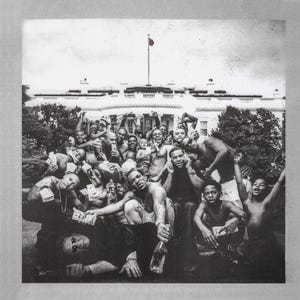
When local police departments militarized, the federal government funded it. When officers got qualified immunity, federal courts granted it. When the war on drugs became a war on Black communities, federal policy designed it. When police shot unarmed Black men and faced no consequences, the entire system, local, state, and federal, allowed it.
Law enforcement is a fractal. What happens at the local level is either sanctioned or ignored by everyone above it. If the top wanted it stopped, it would stop. The federal government was always complicit, through action or inaction, through funding or silence, through laws or the refusal to enforce them.
The only difference now is they’re not pretending anymore.
The infrastructure for fascism was being built in Black neighborhoods for decades while everyone else looked away. The verses were describing exactly this: what it feels like when power is unchecked, when enforcement is terror, when there’s no one to hold them accountable.
What you’re feeling right now, that sickening realization that no one can stop this, that the system itself is the problem, Black America has been living that reality for generations.
There are good cops. There are good people in law enforcement. That has always been true.
And yet, clearly, we are seeing something else now. Something darker. Something history has shown us before.
So I have to ask:
Were you not listening to the verses?
Were you not paying attention when the songs kept going after the hook?
Were you tuned out while people were telling you, plainly, what this country is capable of?
Your outrage is real. And that matters.
But it cannot be selective. It cannot only activate when it reaches your neighborhood, your friends, and your sense of safety.
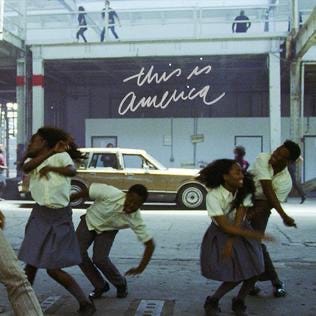
We’re watching something dangerous unfold in real time, something that echoes patterns from history that we promised ourselves we’d recognize earlier next time. The kind of thing that tends to re-emerge when societies forget what unchecked power looks like up close. When the people who lived through the last collapse are gone, and the memory of how quickly norms can disappear has faded. That forgetting often happens over the span of a few generations, not because history runs on a fixed clock, but because collective memory decays in America with remarkable speed.
If we don’t stand up now: clearly, loudly, and consistently, then the next real chance to stop this may not come for decades. And it won’t be us dealing with the consequences. It will be our kids. Our grandkids. Asking why we didn’t act when we still had time.
The verses have been playing the whole time.
ICE didn’t invent this.
Police didn’t invent this.
This is about power, fear, and who we decide to protect.
The question isn’t whether we’re shocked.
It’s whether we’re finally listening and whether we’re willing to stop the cycle now, rather than hand it off to the next generation.
Agency Chain: This piece: H+AI-T+H-Edit+AI-A+H-Edit (Human-written, AI-transcribed, Human-edited, AI-formatted, Human-edited)